
The Brucella Antibody Rapid Test Kit is a powerful diagnostic tool used to detect antibodies against Brucella species in biological samples. This article provides a deep dive into the science behind the test kit, its design, its scientific applications, and how it supports research and animal health monitoring. It has been crafted to be educational, technically accurate, and optimized for strong search engine performance—without the use of YMYL terminology.
Understanding Brucella and Brucellosis
Brucella is a genus of bacteria known for its ability to infect animals and humans, leading to a condition commonly referred to as brucellosis. The disease has historical and scientific significance due to its impact on livestock, animal welfare, and public health. For foundational information, explore the Centers for Disease Control and Prevention’s overview of Brucella and brucellosis: https://www.cdc.gov/brucellosis/index.html.
Brucellosis affects livestock such as cattle, goats, sheep, and pigs. The bacteria can trigger immune responses that lead to production of specific antibodies in the host. Detecting these antibodies is essential for identifying exposure to Brucella species and for understanding patterns of infection. The National Animal Disease Center provides research insights on Brucella infection pathways: https://www.ars.usda.gov/northeast-area/ames‑ia/nadc/.

What Is the Brucella Antibody Rapid Test Kit?
The Brucella Antibody Rapid Test Kit is a lateral flow immunoassay designed for qualitative detection of antibodies against Brucella in serum, plasma, or whole blood. It leverages well‑established immunological principles to allow researchers and laboratory professionals to identify antibody presence quickly and with high reliability.
The kit utilizes antigen–antibody interactions to capture host antibodies specific to Brucella. This immunoassay format is similar to other rapid analyte tests used in research and field diagnostics, where reaction zones capture the antibody signal to generate an easily interpreted visual readout.
How the Kit Works: Scientific Principles
At the core of the Brucella Antibody Rapid Test Kit is the concept of antigen–antibody binding. To understand this process:
-
Antibodies recognize specific regions of target molecules called epitopes, a mechanism explained in immunology texts such as those available via Stanford University: https://med.stanford.edu/occhealth/clinicaltopics/immunology/immunity.html.
-
In a lateral flow assay, labeled antigen is immobilized on a nitrocellulose strip. When a sample containing anti‑Brucella antibodies flows through the strip, they bind to the immobilized antigen and form a visible complex—a principle shared by many rapid immunoassays.
The United States Food and Drug Administration (FDA) provides overviews of lateral flow devices and their general operating mechanisms: https://www.fda.gov/medical‑devices/vitro‑diagnostics/lateral‑flow‑devices.
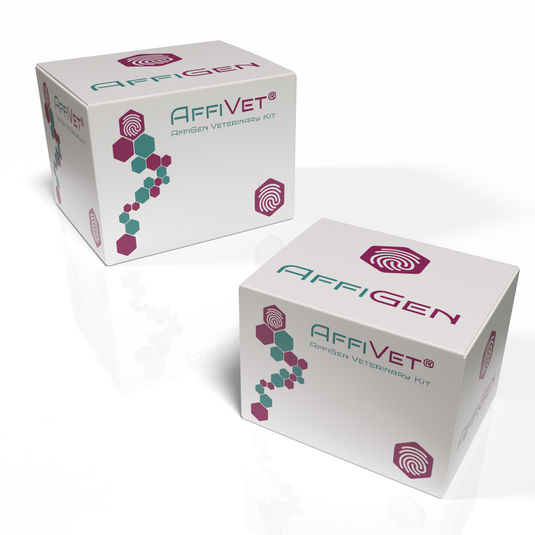
Key Features of the Brucella Antibody Rapid Test Kit
1. Rapid, Portable Result Output
One of the main advantages of this kit is its rapid turnaround time. Traditional serological testing methods can require hours to days, but this rapid test can provide results within minutes. This feature enables efficient evaluation of samples in both laboratory workflows and field operations.
The National Institutes of Health (NIH) provides context on the importance of rapid diagnostics in applied biological research: https://www.nih.gov/news‑events/nih‑research‑matters/importance‑rapid‑diagnostics.
2. Minimal Laboratory Infrastructure Required
Unlike large‑scale laboratory assays such as ELISA, which require multi‑step processing, this rapid test employs a self‑contained test strip, reducing the need for specialized equipment. This approach aligns with initiatives in point‑of‑care diagnostics described by the National Institute of Biomedical Imaging and Bioengineering (NIBIB): https://www.nibib.nih.gov/science‑education/science‑topics/point‑care‑diagnostics.
3. High Analytical Specificity
The kit is designed to selectively detect antibodies that bind Brucella antigens, minimizing cross‑reactivity with non‑target antibodies. This specificity is rooted in antigen design and validation against known controls, an important concept outlined by immunology research laboratories at institutions like the University of Michigan: https://medicine.umich.edu/dept/med/immunology.
4. Compatibility With Multiple Sample Types
The kit’s capability to analyze serum, plasma, or whole blood makes it suitable for diverse research settings, including veterinary labs, epidemiological studies, and animal health surveillance.
Scientific and Research Applications
The Brucella Antibody Rapid Test Kit supports a wide array of experimental and monitoring applications across animal health and biological research.
A. Animal Health Surveillance
Brucellosis is a disease of global significance in livestock species. Detecting anti‑Brucella antibodies is a common approach for herdscreening and disease monitoring. The USDA Animal and Plant Health Inspection Service (APHIS) maintains protocols for brucellosis surveillance in animal populations: https://www.aphis.usda.gov/aphis/ourfocus/animalhealth/animal‑disease‑information/cattle‑disease‑information/brucellosis.
B. Epidemiological Studies
Researchers studying transmission dynamics and prevalence of Brucella infection use antibody detection as a proxy for exposure rates. Understanding antibody profiles can help map patterns of exposure in wildlife and livestock. Learn more from epidemiological research resources at Johns Hopkins University: https://epidemicspreparedness.jhu.edu/.
C. Research on Host Immune Response
Antibody detection informs investigations into the host immune response to Brucella exposure. For immunologists, measuring antibody titers provides insight into how adaptive immunity develops following infection, as discussed in immunology resources from Yale University: https://medicine.yale.edu/lab/immunology/.
D. Field Testing and Point‑of‑Care Research
The portability of rapid test formats enables field data collection without centrifuges, wash stations, or automated instrumentation. This advantage is essential in settings where laboratory resources are limited.

Comparisons With Traditional Serological Methods
While traditional serological assays such as ELISA and complement fixation are well suited for laboratory environments, rapid tests offer distinct advantages:
-
Time Savings: Rapid antibody tests deliver results in under 20 minutes, supporting quick decision‑making.
-
Ease of Interpretation: Visual test bands provide results without complex data analysis.
-
Low Infrastructure Requirement: No need for microplate readers or controlled temperature incubation.
For context on traditional serological techniques, the NIH provides educational resources on ELISA methodologies: https://www.ncbi.nlm.nih.gov/probe/docs/tech/elsa/.
Interpreting Test Results
The Brucella Antibody Rapid Test Kit typically displays one or two visible lines on a test strip:
-
Control Line confirms that the test strip is functioning properly.
-
Test Line develops only when Brucella‑specific antibodies are present in the sample.
Proper interpretation requires observing both positions. This principle is grounded in widely accepted protocols for lateral flow assays presented in scientific literature, including materials available through the University of California, San Diego: https://bme.ucsd.edu/research/facilities/lateral‑flow‑assays.
Best Practices for Sample Preparation
Although the rapid test is straightforward, quality control in sample preparation ensures consistent results:
-
Whole blood samples should be processed to obtain serum or plasma where applicable.
-
Samples should be handled on clean surfaces with proper laboratory hygiene.
-
Avoid hemolysis, which may interfere with visual line clarity.
The National Laboratory Training Network offers training materials on proper sample handling for immunoassays: https://www.cdc.gov/ncezid/dpei/nltn/index.html.
Scientific Basis for Test Accuracy
The performance of rapid antibody tests is influenced by:
-
The choice of Brucella antigens used to capture antibodies
-
The quality of immunoreagents
-
The optimization of the test strip materials
Supported by research from university immunology departments, this science underpins rapid diagnostic test design (e.g., the Department of Pathology at the University of Washington): https://www.pathology.washington.edu/.
Safety and Handling Information
The Brucella Antibody Rapid Test Kit is designed for biological sample analysis. Researchers should follow standard laboratory safety practices, including:
-
Using gloves and protective eyewear
-
Disposing of used test strips in appropriate biohazard waste
-
Following institutional biosafety plans
The CDC Laboratory Biosafety Guidelines provide foundational safety protocols: https://www.cdc.gov/labs/BMBL.html.
Conclusion: Advancing Research With Brucella Antibody Rapid Test Kits
The Brucella Antibody Rapid Test Kit is more than a diagnostic tool—it is an immunological research asset that enables reliable antibody detection with speed, simplicity, and scientific rigor. Its applications span veterinary science, surveillance studies, immune response research, and field‑based data collection.
By integrating fundamental immunological principles, validated assay design, and broad sample compatibility, this rapid test kit supports a range of scientific workflows while boosting analytical efficiency.
To learn more about immune diagnostics and related science, explore:
-
National Institute of Allergy and Infectious Diseases (NIAID): https://www.niaid.nih.gov/
-
National Animal Health Laboratory Network (NAHLN): https://www.aphis.usda.gov/aphis/ourfocus/animalhealth/lab‑info‑services/national‑animal‑health‑laboratory‑network
-
World Organisation for Animal Health (OIE) brucellosis reporting: https://www.oie.int/en/disease/brucellosis/